The Wheatley School Alumni Association Newsletter # 187Some Relatively Long Essays in This Edition, Including One From Los Angeles
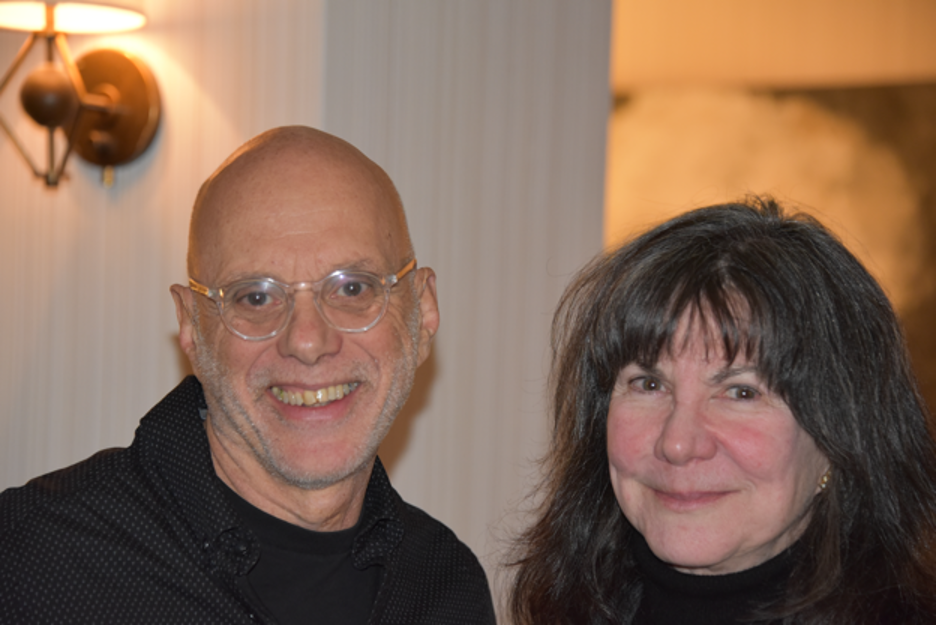
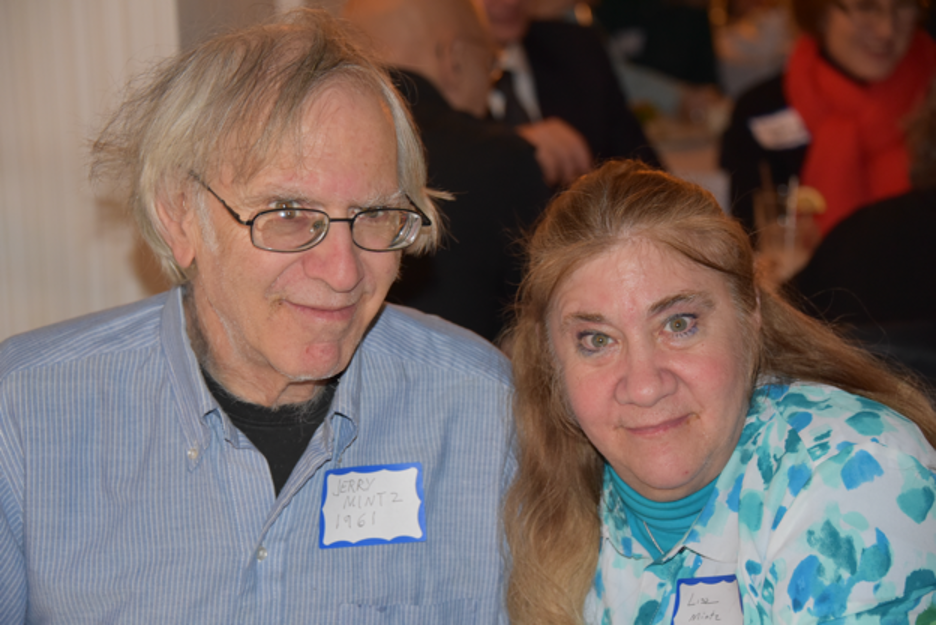
Welcome to the Wheatley School Alumni Association Newsletter # 187, REPORTS FROM LOS ANGELES - 1/25Barbara Noble (1968) Writes - “I have been thinking about writing of growing up on Shepard Lane and the S-Section, as so many others have, but instead I'll write about L.A. today, as the fires are still burning. I live on the northern end of Santa Monica now, in a little bungalow complex with a courtyard. It was once a sleepy beach town, but it has been transformed in the 44 years I’ve lived here. The charming complexes have mostly been razed for larger, more densely packed, expensive condos. So much of the history and beauty of the beach cities has been erased. Funky downtown Santa Monica, Main Street, Montana Avenue, all with quirky stores replaced by ever changing whatever. Upscale. More condos, no parking. Inevitable. My first 7+ years I lived in the Hollywood Hills. Hollywood Boulevard was filled with large ancient bookstores, movie palaces and of course, Fredricks of Hollywood and the Pussycat Theatre. All of that is long gone. The restaurant Musso and Frank still stands. It opened in 1919, and all the great writers that Hollywood recruited had their own back room. Musso's was a second home to famous actors, too, from Charlie Chaplin on. I was a regular for lunch at the counter and with friends for dinner. There was often a lot of table hopping, as if all your friends showed up at once. I returned after living at the beach for 20 years, and all the waiters came over to greet me and asked where I had been. My Hollywood neighborhood had the old mansions of long dead movie stars, divided up into apartments. Mine was once owned by Faye Wray, the original scream queen in the 1933 King Kong. An old timer lived on the street and told stories of Clark Gable and all the actors partying there. Viva, of Andy Warhol fame, lived upstairs for a time, and was my friendly neighbor. Marlon Brando had a friend in the building, and he would visit. The original voice of Disney’s 1937 Snow White and the Seven Dwarfs, Adriana Caselotti, lived in the neighborhood, often gardening, and she would sing 'Someday My Prince Will Come’ rather spontaneously, exactly as she sounded in the movie. L.A. is a very large and spread out city. But somehow in the 51+ years I’ve lived here, I’ve been in most of the neighborhoods and have known people all over town. L.A. is a diverse city, and yes, there have been gang wars in the past, too close to where I lived in Ocean Park, but there is much intermingling of cultures and races, and it makes L.A. truly rich. The fires are unimaginable. It’s like all of Roslyn Heights, Alberson, East Williston, Old Westbury, Roslyn, Hempstead, Manhasset, Garden City, Great Neck, Wheatley, Willets Road, North Side, the surrounding schools, temples, churches, parks, roads, delis, restaurants, everything you’ve known has turned to ash. Every person scattered, Many pets lost. All the beauty, history, everything. Historic buildings, architectural landmarks, all gone. It’s devastating. The local news is covering it 24 hours. And it’s not over. Seeing the billowing smoke on Tuesday, the first day of the Palisades fire, covering the beach and the area north of me, and the speed it was moving is burned into my memory. I’ve seen a lot of fires in L.A., none of them good. It can make the sky orange and the sun red. Ash falls like snowflakes. This one was plumes and plumes of white smoke for miles against a gorgeous blue sky. The winds were so fierce, it was difficult to walk. That night, the winds were howling as loud as a freight train. And then the fire in Altadena. In the morning, the tree limbs that the winds snapped were so thick they could have killed a person walking under them. The sky was black with smoke from Altadena and the Palisades. Then the Hollywood Hills went up. Then three more. The arsonists love the Santa Ana winds. Long ago, when I was working up in Malibu, the winds were blowing, and the arsonists were busy. I had to leave, or I’d never make it home. I had a small BMW 2002 and proceeded down the Pacific Coast Highway. First responders were yelling, “GO,” so I did. I might have reached 80 mph. Maybe more. It was like a war zone. The fire jumped the road. By Wednesday, I got the alert. The new evacuation zones were six blocks to the west of me, and six blocks to the north. It was time to pack. When the order comes, you have to go, ready or not. It is a very strange feeling to imagine everything you have (and I don’t have a lot) going up in flames, and basically taking a last look knowing that you have to let it all go. By Thursday afternoon, there was nothing left to burn in the Palisades, so I felt safe, even though the evacuations were still in place and a curfew too (a deterrent for those who will loot). I was lucky. So many were not, and they lost so much more than I would have. Pacific Palisades was beautiful, as was Altadena, Malibu, and the other neighborhoods that are affected. Real neighborhoods, where people look out for each other. No neighborhood is only wealthy, and few homes can be fully covered by insurance, as the insurance companies won’t take that risk. Fire trucks have been racing here from eight states, Mexico, and Canada. The outpouring of help is enough to touch anyone’s heart. One temple raised $10,000 within an hour to deliver and buy lunches for the fire stations, and the money is still coming. Food trucks have gathered to give out free food. People are showing up with diapers, water, clothes, toiletries, and everything else you can think of. The stories are so sad. There are so many of them. All of L.A. is heartbroken. As the billowing smoke has burned into my memory, so have the stories. The thing is, I love L.A.” A second Wheatley graduate wrote that a third Wheatley graduate “was evacuated, sheltering with her son and fearful that they lost their home.... I'm sure there are other Wheatley-ites as well...” Class of 1975 Needs A Bass PlayerMid-1970s alum needed to play bass at Class of ‘75’s 50th-Year Reunion Celebration.As part of the Class of 1975’s 50th-year reunion weekend festivities, the Class’s Reunion Committee is planning an open music jam for classmates. We aren’t aware of any bass players in our class, but it would be fun to reconnect and play with someone we know from Wheatley. Details are still being worked out, but the jam will probably take place on October 10 or 11, either at the school or somewhere nearby. If you play bass, graduated in/around the mid ‘70s, and are interested in playing in the “house band,” please contact Mark Lubin at mark.lubin@outlook.com. Class of 1988 ReunionSeveral graduates are already talking about organizing a Class of 1988 Reunion. If you’re interested in joining them, or just finding out more, please email me, and I will point you in the correct direction. ARTENGORON@GMAIL.COM “Twins” at a 2010s Wheatley Luncheon1967 - Stephens and Stevens
L-R - Mitch Stephens and Nancy Stevens 1961 and 1968 - Mintz and Mintz
L-R - Jerry Mintz (1961) and Lisa Mintz (1968) The Wheatley School Alumni Public Directory Is Alive and WellThe. Wheatley Alumni Directory Thoughts About WheatleyBarbara Rosenbaum Carey (1964) Writes - “As students, it’s difficult to appreciate and recognize what a remarkable school we were lucky enough to attend. (I didn’t have a clue!) We can see that now, looking back.” Happy New Year. Barbara Rosenbaum Carey ‘64 Jill Simon Forte (1967) Writes - “This morning, reading the newsletter made me proud to have been a graduate of Wheatley . Even if I didn’t reap all of the benefits of the wonderful school . The writing of Miles Fidelman (1971) in the previous issue demonstrates that there are still many great and empathetic people out here.” FacultyBob Martin (1959) Writes - “HELP! I need information about Mrs. Lula Smith, who taught me general science in ninth grade at the Willets Road School (when Wheatley was being built), 1955-56. Does anyone know anything about her?” GraduatesWheatley and the Massachusetts Institute of Technology Karen Wattel Arenson (1966) Writes - Hi Arthur, I was interested to see notes in the Jan. 4, 2025 Wheatley Newsletter (Issue # 186) from two alums who went from Wheatley to MIT: Miles Fidelman (Wheatley ’71), who is coming up on his 50th-year MIT reunion, and Todd Glickman (Wheatley ’73), who was active in MIT’s radio station, which was then named WTBS — until MIT sold the call letters to Ted Turner, who wanted those call letters as his own. An MIT News Release in 2001 said Todd was the MIT station’s first meteorologist and quoted him as follows: “‘Ted Turner's generous contribution helped us update our technical equipment at a critical time,' said Todd Glickman, Class of 1977, President of the Technology Broadcasting Corp., which oversees the station. Mr. Glickman became the station's first meteorologist during his freshman year and has been involved ever since.” Todd is still at MIT as its Senior Director of Corporate Relations. Ned Lagin and I both went from the Wheatley Class of ’66 to the MIT class of ’70. Kathy Kram followed soon after (Wheatley ’68 and MIT ’72). John Corwin was two years ahead of Ned and me: Wheatley ’64 and MIT ’68, and he earned a law degree from Harvard in ’73. Ned played occasionally with the Grateful Dead and focused his life on music and art, especially photography. I went to MIT to major in economics and went into journalism, starting with a focus on business, finance and economics. I spent 30 years with The New York Times. Kathy went on to earn a PhD at Yale and for decades was a professor at Boston University’s School of Management. She is co-author of a recently published book: “Retiring: Creating a Life That Works for You.” Editor’s Note - Here are the Wheatley/MIT alumni of whom the Newsletter staff is aware (additions welcome): Last Name Current Last Name First Name Year Corwin. John 1964 Lagin Ned 1966 Wattel Arenson Karen 1966 Kram Kathy 1968 Fidelman Miles 1971 Rothman Greg 1971 Glickman Todd 1973 Hack Katz Jan 1975 Smith Douglas 1977 Valicenti Richard 1977 Chin David 1979 Fiorino Anthony 1985 Ueno Kohta 1988 Yang Chen 2000 Jia Xiaoman 2002 1967 - Mitch Stephens - Culture Critic/Journalist Mitch wrote the following essay for the blog he writes with a bunch of friends: WritingAboutOurGeneration.com. (Contact Mitch if you have an article idea.) Bob Dylan A-Changin’Written by Mitchell Stephens Earlier installments in our series on the Roots of the Hippie Idea:Click for the introduction to this series: “The Roots of the Hippie Idea.” Click for “Whitman and Thoreau and the Hippies.” Click for the Beatniks and the Hippies Click for Modernism and the Hippies We were born into this—this notion that to be an artist was perpetually to be rethinking what an artist should be, a notion very much at the heart of James Mangold’s Bob Dylan biopic, A Complete Unknown. I don’t think Mozart saw himself as involved in continually reinventing music. Rembrandt was struggling to portray what he saw, not struggling to reconceptualize what painting might be. But the rules of painting had changed dramatically in Paris in the second half of the 19th century as Claude Monet, Edgar Degas and Camille Pissarro began painting en plein air; painting fast, with a palette of bright, sunlit colors; and painting ordinary people—not Napoleon on his horse. A theory—a wonderfully invigorating theory—had been placed before Napoleon’s horse. And, of course, impressionism was arriving at the same time as politics and economics were also gaining a couple of even more ambitious isms. Impressionism lost its excitement for artists (though not for their audiences) in the 20th century. But what did last for most of that new century was this notion that to be an artist was to rethink the rules of art itself. So, we had Fauvism, Cubism, Futurism, Dada, Surrealism, Abstract Expressionism, Pop Art, Minimalism and Postmodernism. Jazz went through, among other fashions, big band, swing and bebop. Even philosophy underwent periodic reconceptualization in the 20th century: phenomenology, existentialism, analytic philosophy, ordinary language, logical positivism, structuralism, poststructuralism and deconstruction.
It was all acutely self-conscious, somewhat precious, inescapably meta and kinda fun—you did not just get to paint or play jazz or do philosophy; you got to theorize about what these endeavors should be. Cool. Which brings us to Bob Dylan at the Newport Folk Festival on the evening of July 25, 1965. Dylan’s decision to infuriate the sainted Pete Seeger by bringing a full electric band onto the folk festival stage with him was, as a bunch of 20th-century philosophic schools might put it, “overdetermined.”
And what exactly was the nature of Dylan’s rebellion at Newport in 1965? As shown in Mangold’s movie, which is quite good at setting the scene, if not at exploring the ideas bubbling up in that scene, Dylan went on stage with a drummer, an electric bass player and a couple of electric guitars. The previous summer Dylan had notably turned all four Beatles on to marijuana while they were visiting New York. And in the summer of 1964 at Newport, Dylan had sung perhaps the most powerful ode to hallucinogenic drugs ever written: Mr. Tambourine Man:
Remarkably, no one complained about the drug stuff. But drums and electric instruments! Heaven forfend! Bob Dylan would soon reveal himself to be something of a leavin’-it-all-behind addict. And perpetually moving on to the next thing without looking back actually kind of worked in lightly anchored, newness-prizing art forms like 20th century painting and second-half-of-the-20th-century rock ‘n’ roll.
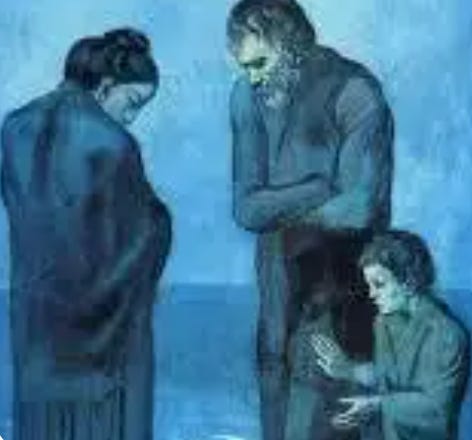
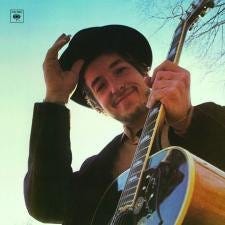
Picasso had had his Blue Period, then his Rose Period, before helping launch Cubism. Dylan—never one to be out-morphed—followed the masterful rock ‘n’ roll albums, Highway 61 Revisited and Blonde on Blonde, by stripping away the electric guitars and flights of beatnik poesy for John Wesley Harding in December 1967, then making a country album, Nashville Skyline, in the spring of 1969.
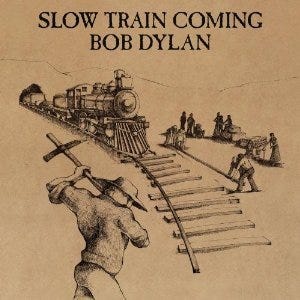
And we all—our generation, even the Beatles themselves—were taking lessons from the peripatetic Mr. Dylan on the great power of genre, of style, of reinvention. For Dylan never took genres lightly. For him it was always whole hog—until it was nothing, and he had moved on. Which made Dylan—though perhaps the most interesting character in rock ‘n’ roll—an odd choice as a role model. Following him into something was okay, but it always necessitated following him out of the something we had previously followed him into. Maybe we could handle that: Country music, sure! Far out! But then it reached the point where we could no longer handle it. For in 1979, Bob Dylan reappeared in the one guise that was probably the most difficult for most members of his previously loyal audience to abide: as a born-again Christian, baptized in Pat Boone’s pool. (Though the first Christian record, Slow Train Coming, released in the summer of 1979, was actually pretty good.)
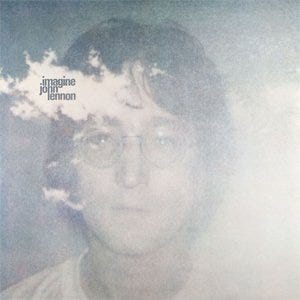
So what was the lesson of all these modernist shifts, often into pre-modern roles; shifts we first noticed at Newport in 1965? What was Dylan teaching—what had Picasso and, maybe, Jean-Luc Godard who had gone before, and those, like John Lennon, who followed, been teaching? It sure seemed like these restless souls were saying: Keep a-changin’. Don’t look back. Be true to your feelings in the moment.
However, we were not—most of us—brave enough for that, for picking up and leaving it all behind. We were not—most of us—even true artists. We were, instead, wise enough to stop practicing guitar-fingerings in mom and dad’s basement and, eventually apply to law school. Shape-shifting did not work all that well with spouses and kids and careers. Nonetheless, our inner Bob Dylans were never entirely abandoned. You could honor them with your broad and shifting tastes in music, with the odd books you read, the art-house films you caught, the dope you smoked on weekends. There remained a little hippie, a little artist, a little a-changing, a little Bob Dylan, in us all. Mitchell Stephens Mitchell Stephens, one of the editors of this site, is a professor emeritus of Journalism at New York University, and is the author or co-author of nine books, including the rise of the image the fall of the word, A History of News, Imagine There’s No Heaven: How Atheism Helped Create the Modern World, Beyond News: The Future of Journalism, and The Voice of America: Lowell Thomas and the Invention of 20th Century Journalism. He lives in New York and spends a lot of time traveling and fiddling with video. Mitch's Essay about Bob Dylan, etc. mitchell stephens professor emeritus journalism, nyu books 1984 - 40th-Year Reunion
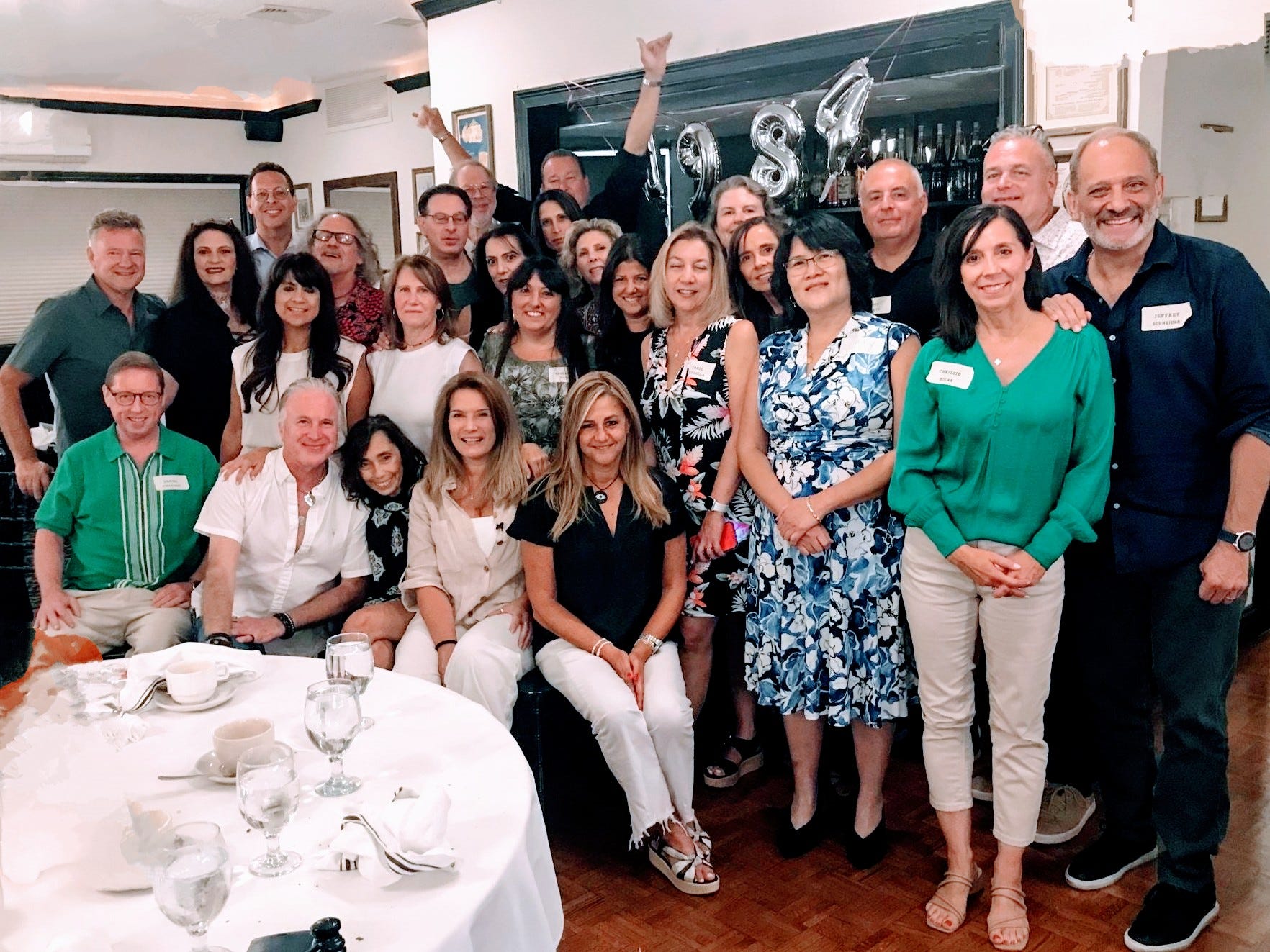
Jeff Schneider (1984) Writes - “Happy Holidays and Happy New Year! In 2024, I attended the 40th-year reunion of my class (photo above), and the flood of memories and amazement in everyone's accomplishments was a wonderful feeling. I saw people with whom I played ‘Eagles versus Condors’ on the North Side Elementary School playground, and I remembered running outside behind the Willets Road School and, also, playing intense street hockey at Wheatley, to name a few memories.” 1984 - Elizabeth Pries - Deceased Catherine Pries Voisinet (1987) Writes - Dear Art, I am Beth Pries' sister, Catherine (Pries) Voisinet ('87 alum, cmvoisinet@yahoo.com, currently living in Virginia). I am writing to let you know that Beth passed away in March, 2024 of breast cancer. She was 57. I'm sorry for the TMI but here goes... Beth was working for Verizon (ATT) downtown when the towers fell on 9/11. She was required to work in order to get the communication hub below the towers back up and running. This means that, for months, she was walking from 14th Street down to Pearl Street and back, breathing in all of the toxic junk in the air. The subways were not running. She was diagnosed in 2017 with triple negative breast cancer and was effectively treated. Her cancer was 9/11 certified. In 2018 she "cleared". However, in 2019, I received a call from her from the emergency room. She had just been diagnosed with more than 25 tumors in her brain. She was given 1 to 4 months to live. However, over the next 5 years, after embracing her self-coined title ‘Warrior goddess,’ she dominated her treatment. She renovated her home on a lake in New Jersey and continued to snow board, motorcycle, mountain bike, and do all of the things she enjoyed, all while receiving weekly treatment until about 1 month before she passed. If you know anything about my sister, she was an amazingly strong woman. I'm not talking New York Strong. I'm talking stronger. Mere mortals would crumble. Although we were close as kids, our paths separated, and it was only after her diagnosis in 2019 that we fully reconnected. Right after her diagnosis in 2019, she threw a Celebration of Life party. There were over 250 people in attendance, from all phases of her life... from childhood, high school, college, career, hobbies, ... It was only after she passed that I learned the extent to which she touched peoples' lives. (recall there are 8 Pries kids). Every party truly started when Beth arrived. She had a special way of engaging people to join in the fun and see the bright side of life. She would encourage people to join games, sing, dance, engage. She always wanted to be at the party. Three days before she passed, we had a second Celebration of Life party. Over 100 people were there in her home. The bar was set up on the back porch, the DJ played her favorite music, and, again, people from all walks of her life joined to share stories with her. Although she could not talk, she gestured, smiled, and clapped. It was a true celebration for an amazing woman. I hope to have that courage and fearless attitude someday. Happy New Year! Kind regards, Cathy Voisinet Fan Mail1959 (Bob Martin) - “Thanks for the Newsletter.” 1964 (Barbara Rosenbaum Carey) - “Thanks for all you do in keeping us apprised of Wheatley alums, faculty and all the wonderful things they do.“ 1965 (Jeffrey Orling) - “Thank you, Arthur, for another incredible read and time journey. You're a saint. Best, Jeffrey” 1965 (Richard Michael Roman) - “Thank you for keeping up the great work that you do for all of us. Michael” 1967 (Susan Miller Astor) - “Thanks for all the work you do to keep Wheatleyites informed and connected.” 1970 (Mitch Shapiro) - “Art & Keith……congratulations on another year of great Newsletters filled with thoughts and memories from a variety of alums! Happy New Year!” 1974 (Susan Resnik Zelman) - “Thank you for all you do.” 1976 (Marjorie Glantz) - “Thanks for all you do.” 1981 (Emily Haft Bloom) - “Thanks, and I appreciate all your diligence and commitment to keeping us up to date on Wheatley goings on!” 1984 (Jeff Schneider) “Thank you for the Alumni Newsletter.” 1987 (Cathy Pries Voisinet) - “Thank you for all you do for Wheatley. Happy New Year!” 1988 (Ariel Kalish Glassman) - “Thanks for continuing to make the effort to keep the Wheatley community tight.” Brought to You By……
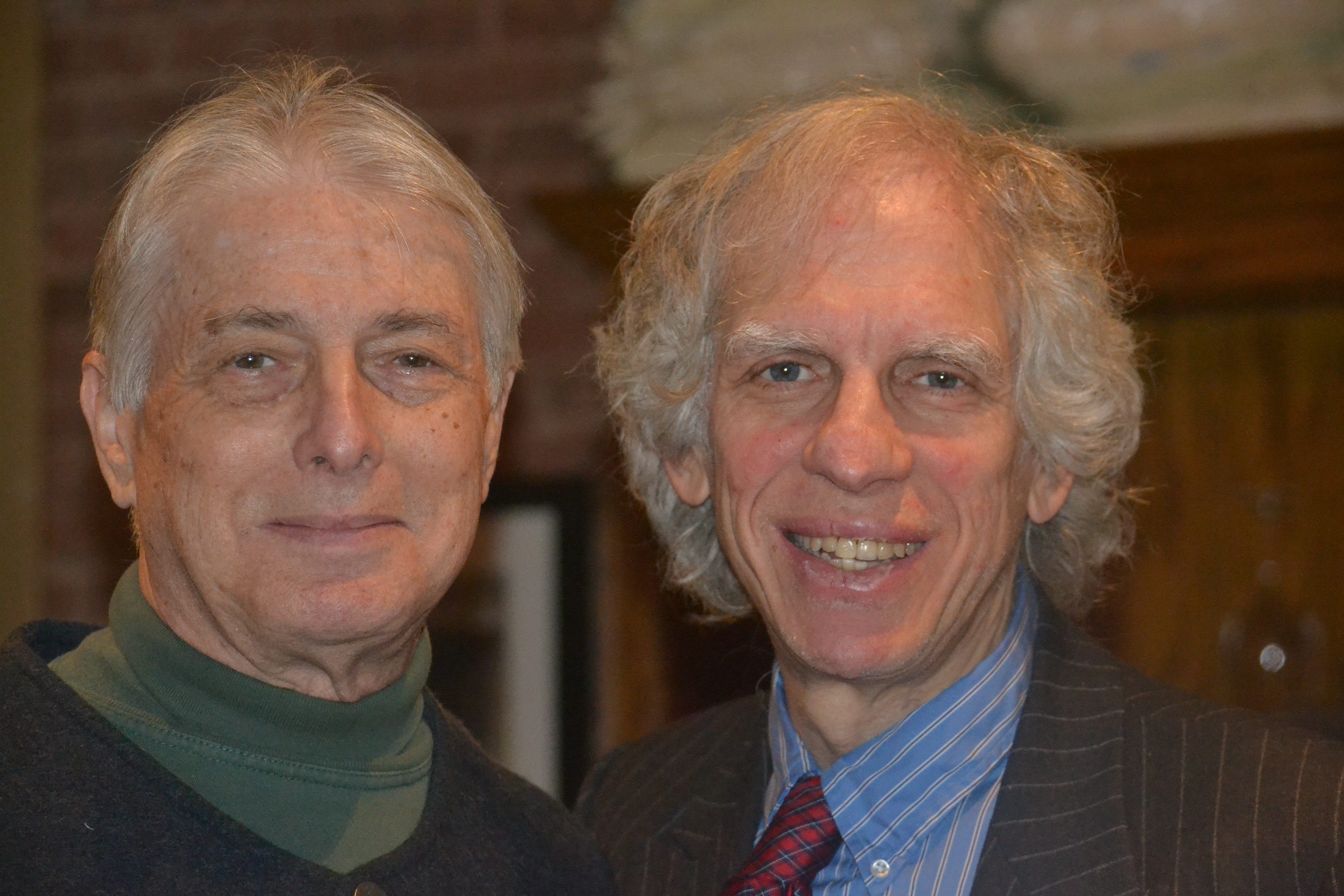
L-R - Keith Aufhauser (1963), Art Engoron 1967 The Official NoticesAll underlined text is a link-to-a-link or a link-to-an-email-address. Clicking anywhere on underlined text, and then clicking on the text that pops up, will get you to your on-line destination or will address an email.In the first 24 or so hours after publication, Wheatley Alumni Newsletter # 186 was viewed 2,875 times and was liked 10 times. In all, 4,725 email addresses received Newsletter # 185. The Usual Words of WisdomThanks to our fabulous Webmaster, Keith Aufhauser (Class of 1963), you can regale yourself with the first 186 Wheatley School Alumni Association Newsletters (and much other Wheatley data and arcana) at The Wheatley School Alumni Association Website Also thanks to Keith is our search engine, prominently displayed on our home page: type in a word or phrase and, wow!, you’ll find every place it exists in all previous Newsletters and other on-site material. I edit all submissions, even material in quotes, for clarity and concision, without any indication thereof. I cannot and do not vouch for the accuracy of what people tell me, as TWSAA does not have a fact-checking department. We welcome any and all text and photos relevant to The Wheatley School, 11 Bacon Road, Old Westbury, NY 11568, and the people who administered, taught, worked, and/or studied there. Art Engoron, Class of 1967 ClosingThat’s it for The Wheatley School Alumni Association Newsletter # 187. Please send me your autobiography before someone else sends me your obituary. Art
WHEATLEYALUMNI@AOL.COM ARTENGORON@GMAIL.COM WWW.WHEATLEYALUMNI.ORG 646-872-4833 |

 Arthur Fredericks Engoron, Class of 1967